Build Your Wishlist

The first step to securing funding is building a plan for your program. Let us help you get started.

CNC Milling Machine Maintenance Training Platform

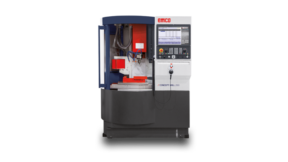
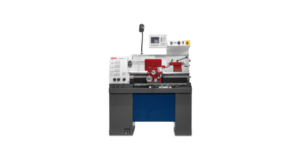
A real CNC milling machine plus a fault-setting electrical cabinet — programming, electrical design, debugging, and maintenance training on one lab platform.

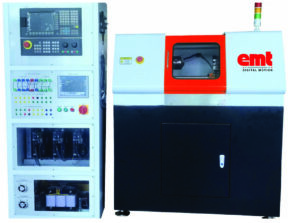
The CNC Milling Machine Maintenance Test Bench is built to close the gap between theory and shop-floor skill. It pairs a compact CNC milling machine with a fault-setting electrical cabinet so students can program parts, process workpieces, and practice maintenance on actual machine hardware — not only on a screen.

It is intended for undergraduate and vocational colleges teaching CNC technology. Learners work through CNC system programming, electrical design, installation, debugging, and machine operation on a single, movable training cell.

Product Details

Why Labs Use This Platform

  • Comprehensive training platform — Fault-setting electrical cabinet plus a small CNC milling machine for practical learning.
  • Advanced training capabilities — Hands-on CNC programming, electrical design, system maintenance, and machine operation.
  • Modular design — Easier expansion, combination, and maintenance of the training system, including debugging and inspection.

Unlike a software-only simulator, this is a real machine tool. Students can disassemble, adjust, and operate hardware they will see in industry: high-speed constant-torque spindle, ball screw, origin/limit switch, electronic handwheel, and cooling water pump.

What Students Work On

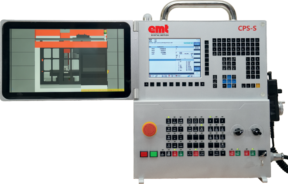
The bench includes optional CNC systems from Siemens, GSK, Huazhong, and FANUC, plus spindle speed-control units, XYZ motion-axis units, and switch input/output units. That mix supports study of control principles, electrical design, and component selection. Modular layout lets instructors match installations and debugging tasks to the curriculum and still mimic industrial process flow.

List of Experiments

  1. Principle and composition of CNC system
  2. Connection and mode of CNC system
  3. Parameter setting and adjustment of CNC system
  4. Design of electrical system for CNC milling machine
  5. Interface training
  6. Adjustment of machine tool reference point
  7. Fault diagnosis and maintenance of CNC milling machine
  8. Operation and programming of numerical control system
  9. Electrical design, installation, wiring, and debugging of suspended handwheel
  10. Composition, adjustment, and use of motor drive system; composition, adjustment, and application of DC speed-regulation system
  11. Screw-rod return error compensation experiment
  12. Creation, editing, and running of CNC program
  13. Basic and functional instructions of CNC program
  14. Manual programming of graphic parts
  15. Manual programming of hole parts
  16. Manual programming of contour parts
  17. Manual programming of groove parts
  18. Manual programming of comprehensive parts
  19. Machine tool lock and program calibration operation
  20. Tool path simulation

Note: The catalogue list jumps from Experiment 10 to Experiment 12. Confirm the official experiment set with EMT if you need a numbered lab manual.

Technical Details

Item Specification
Platform construction Metal-plate integrated cabinet; electrical installation platform and controller plane in an L-shaped layout
Electrical installation platform 220 × 100 cm
Mobility 4 swivel casters with brakes
Electrical cabinet test bench (L × W × H) 80 × 90 × 190 cm
Axes 3-axis CNC milling with ball screws
Handwheel Hanging electronic handwheel (MPG)
Ball screw Precision double-nut ball screw, heat treated and precision ground
CNC system (optional) Siemens 808D, FANUC, or GSK (catalogue also references Huazhong)
Positioning accuracy 0.02 mm
Repeatability 0.01 mm
System resolution 0.001 mm
Work table 460 × 130 mm
X / Y / Z travel 220 / 120 / 200 mm
T-slot 12 mm
Spindle taper ER20
Spindle speed 300–24,000 rpm
Maximum moving speed 2,500 mm/min
Spindle power 2.2 kW
Voltage (as printed) 220 V
Power requirement (as printed) 3-phase 380 V
Machine size 900 × 950 × 1,750 mm
Net weight 320 kg

The catalogue lists maximum feed speeds for X, Y, and Z but does not print numeric values for those three rows. Ask EMT for the completed feed-rate table before publishing a spec sheet.

Transportation Catalog
DAKTIC-Transportation-2025-FINAL-compressed.pdf