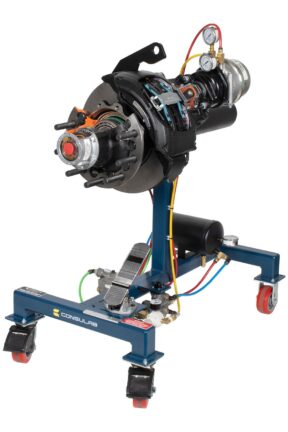
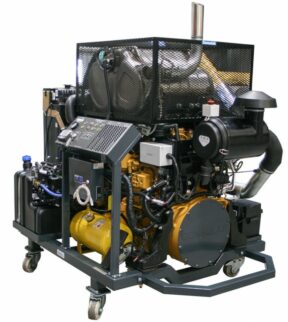
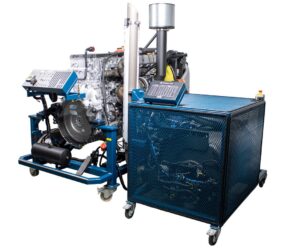
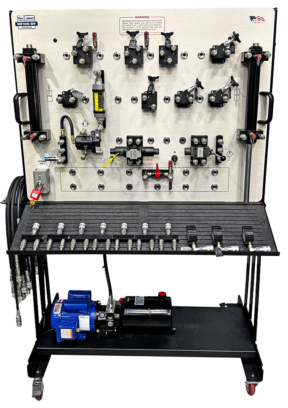
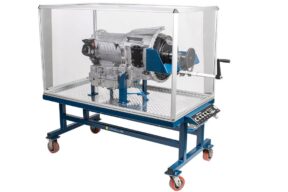
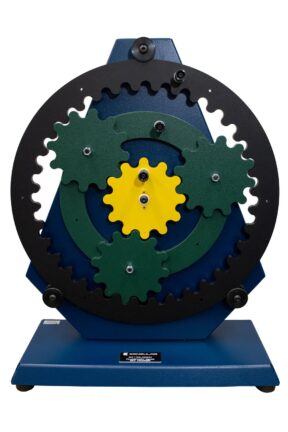
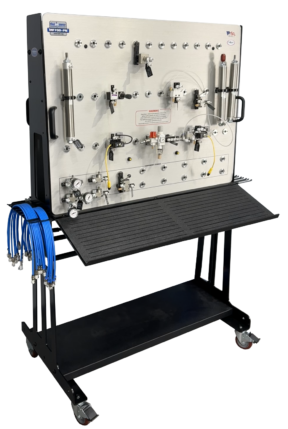
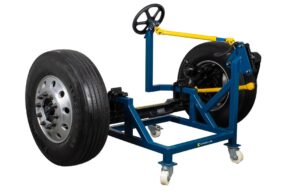
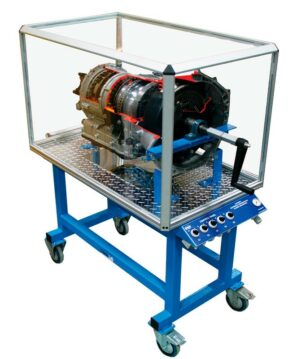
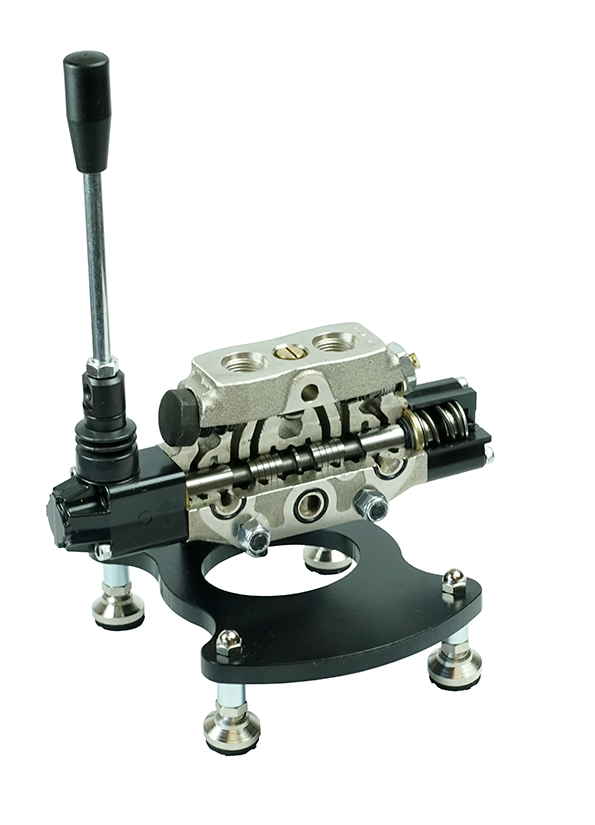
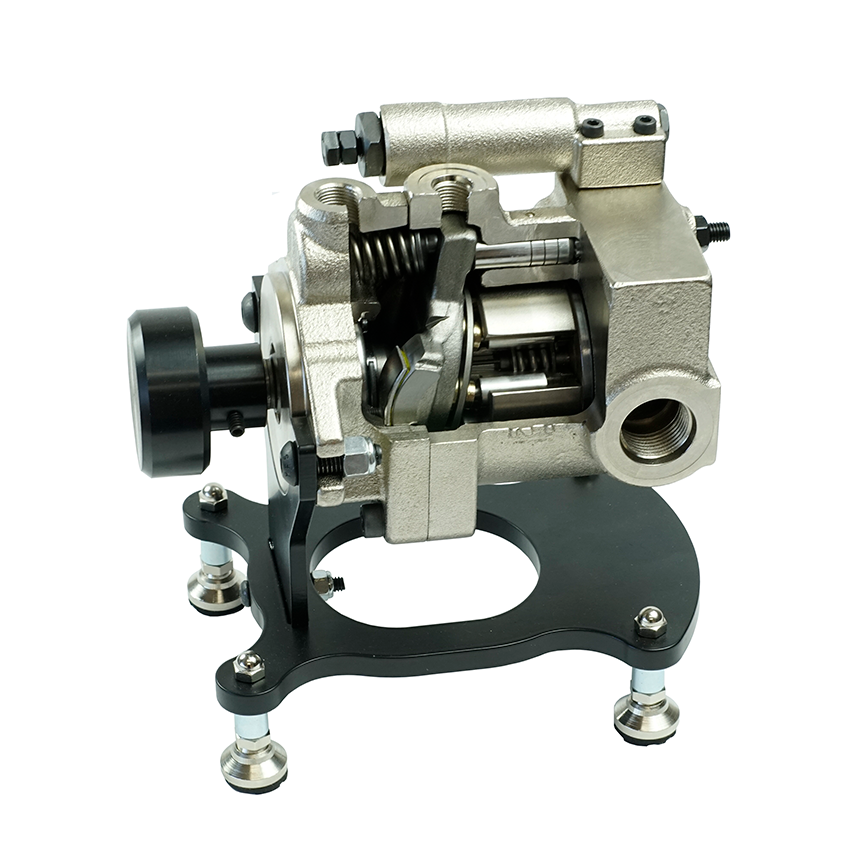
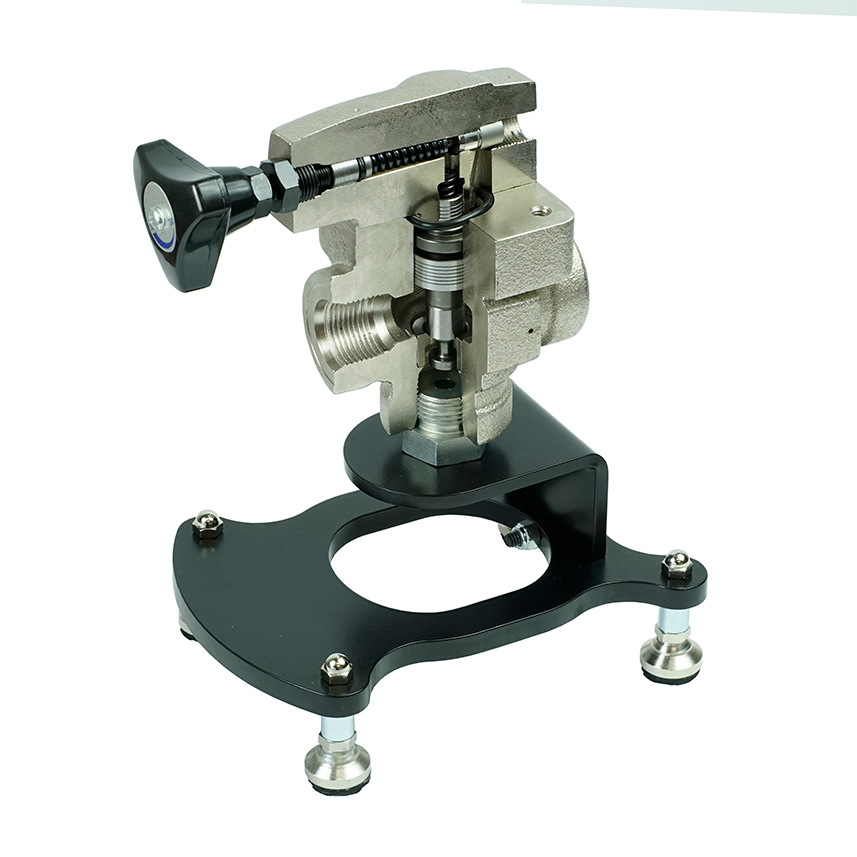
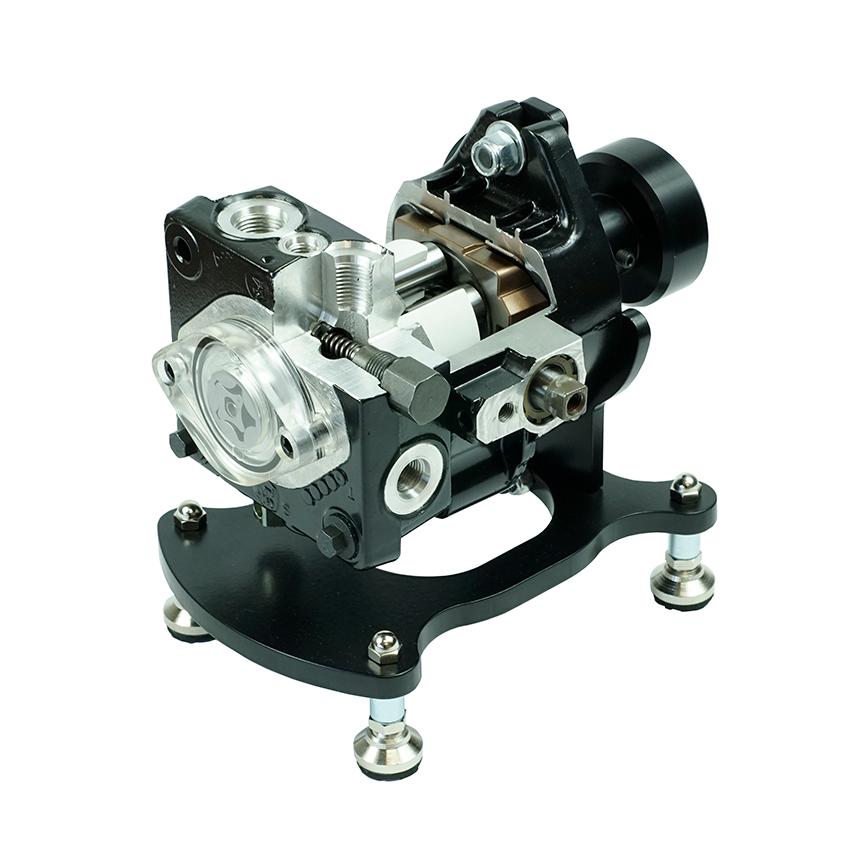
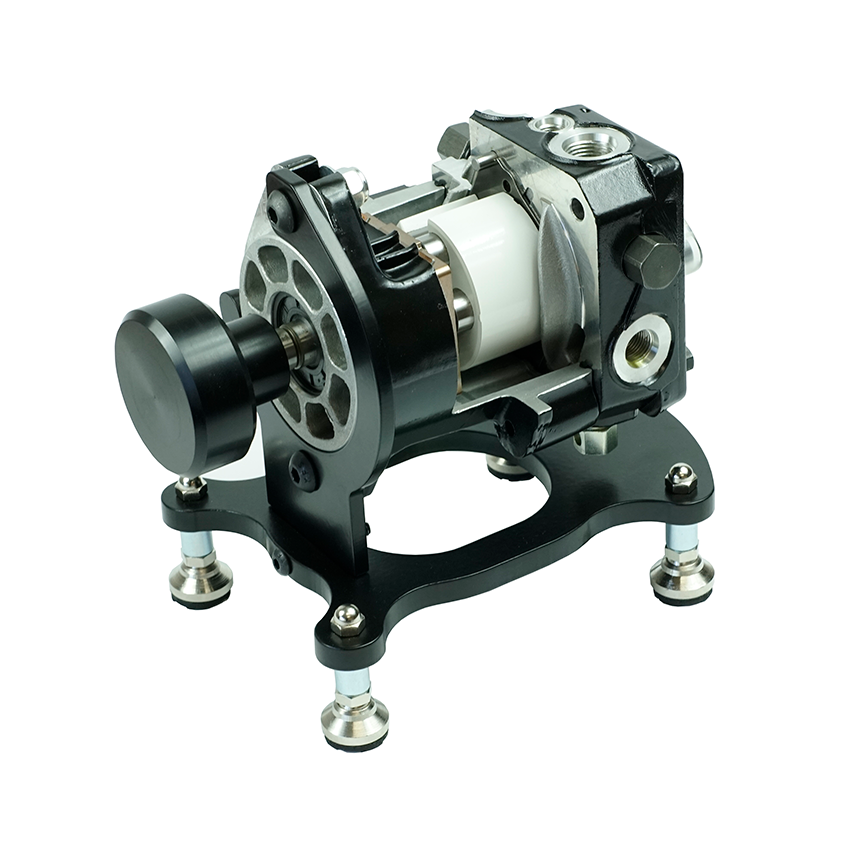
FPTI™ offers a wide variety of cutaway models with exclusive features:
- Lightweight – Heavy components are difficult for students to handle and limit visual access. They are also hazardous because if they slip out of a student’s hands they can cause injury. Heavy components can also damage fragile surfaces.
- Pedestal-mounted – Almost every cutaway model is mounted on an attractive, lightweight metal pedestal equipped with four nylon footpads.
- Plated – Every component is plated to prevent rust and corrosion. The stands are finished with a durable powder coat paint process.
- Amazing detail – Bodies and sub-assemblies are cutaway to expose every working part and oil cavity. Many of the parts are fabricated out of plastic to improve clarity.
- Fully functional – Every component is fully functional. Components with rotating shafts are equipped with large metal knobs to make them easy to rotate.
- Custom products – Don’t see what you are looking for? Let us make a custom cutaway for you. Please call to discuss.
Available Models
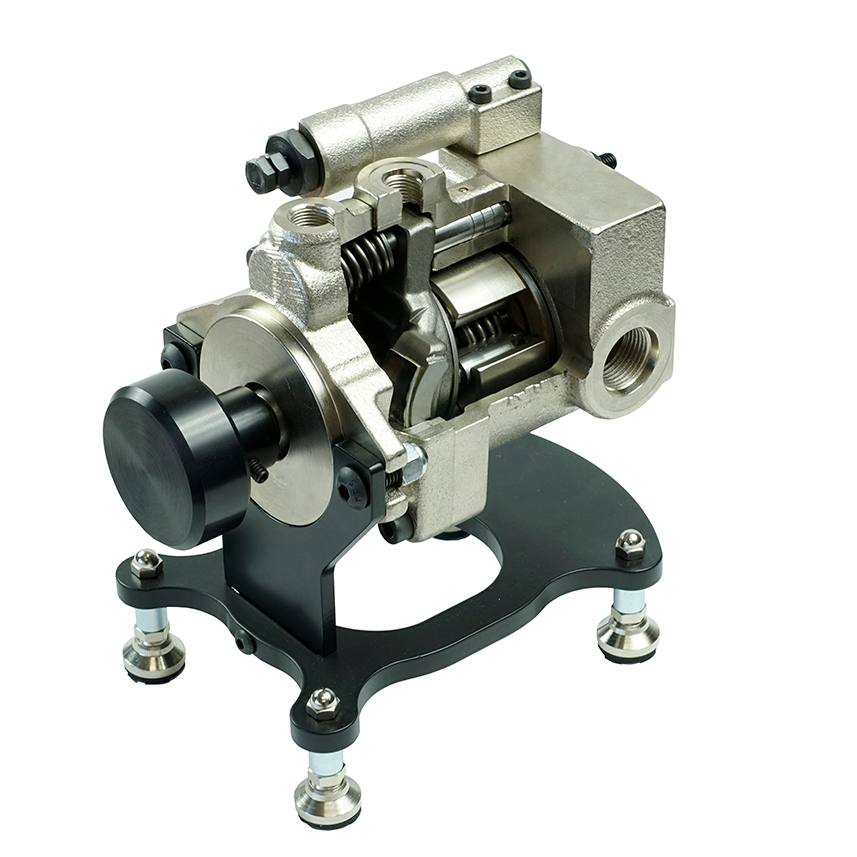
VDP-CM — Over-Center, Axial Piston, Variable Displacement Pump Cutaway
This cutaway gives learners a complete internal view of an over-center axial piston pump, including the swashplate, pistons, pressure relief valve, and charge pump assembly. With multiple strategic cutaways and a manual rotation knob, students can visualize displacement changes and internal oil paths as the pump cycles. Ideal for teaching pump control, pressure compensation, and charge circuit operation.
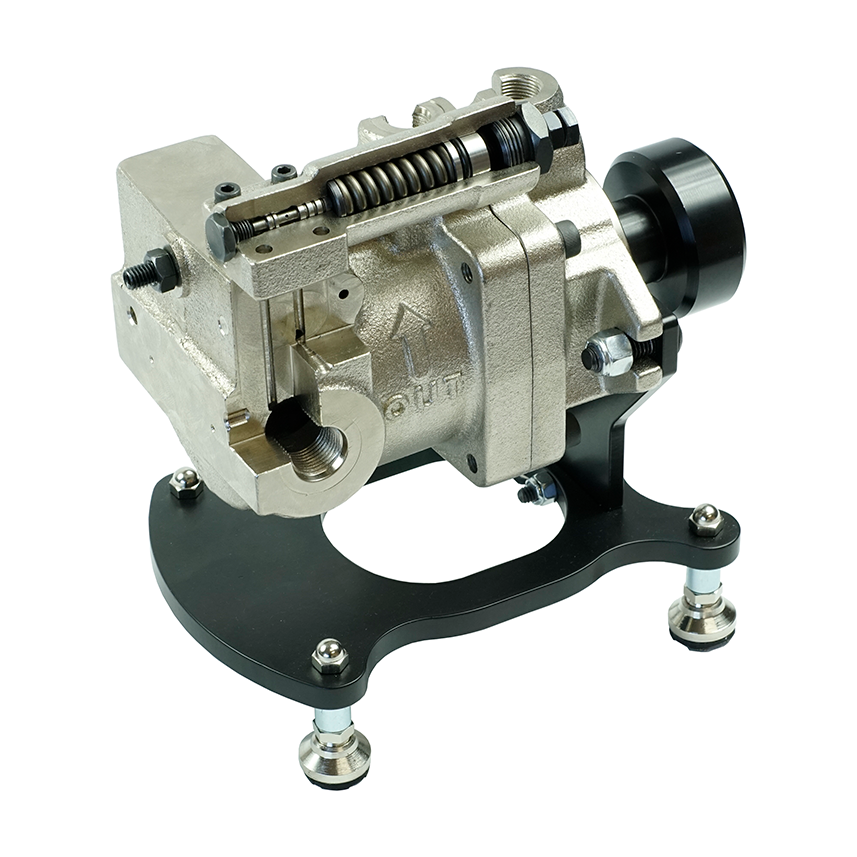
PCP-CM — Axial Piston, Variable Volume, Pressure-Compensated Pump Cutaway
This model exposes the inner workings of a pressure-compensated axial piston pump—including the pump housing, pistons, and complete pressure compensator section. By rotating the pump manually, students see how displacement changes occur and how the compensator manages system pressure. Perfect for illustrating the relationship between pressure control, displacement, and efficiency.
GP-CM — External Gear Pump Cutaway
This cutaway vividly demonstrates the simplicity and reliability of an external gear pump. Students can rotate the shaft to watch the gears mesh and unmesh while observing how oil is carried around the housing. It’s an excellent teaching tool for introducing gear pump operation, volumetric efficiency, and wear patterns.
DCV-08-CM — D08 Directional Control Valve Cutaway
This two-stage D08 valve cutaway reveals internal flow paths, spool movement, and the pilot-stage architecture in a way that is impossible to see in real equipment. Students gain a clear understanding of how pilot pressure shifts the spool and how the valve can be configured for internal or external pilot operation. Ideal for troubleshooting and advanced valve instruction.
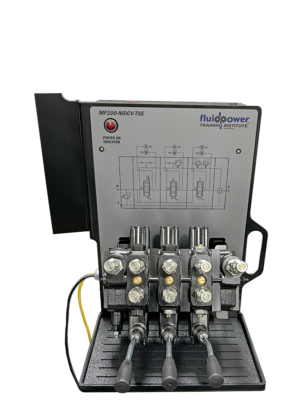
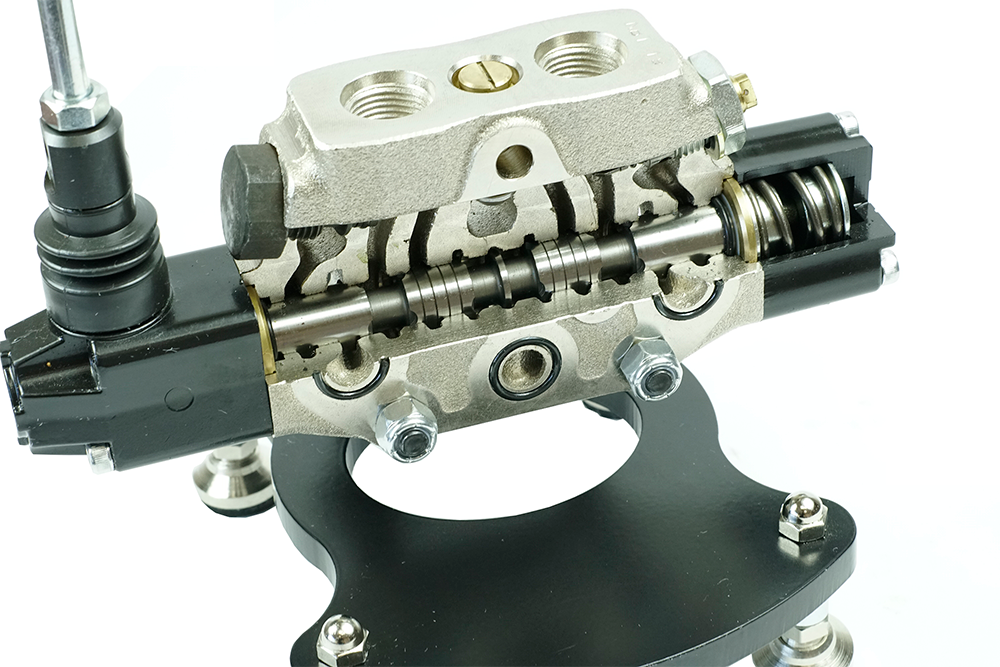
MDCV-CM — Mobile Directional Control Valve Cutaway
This mobile valve cutaway exposes key internal components—including the spool, load check valve, cylinder port relief valves, and anti-cavitation valves. Students can observe flow paths and understand how mobile valves manage load holding, meter-out control, and thermal relief. A powerful tool for connecting schematic symbols to real hardware.
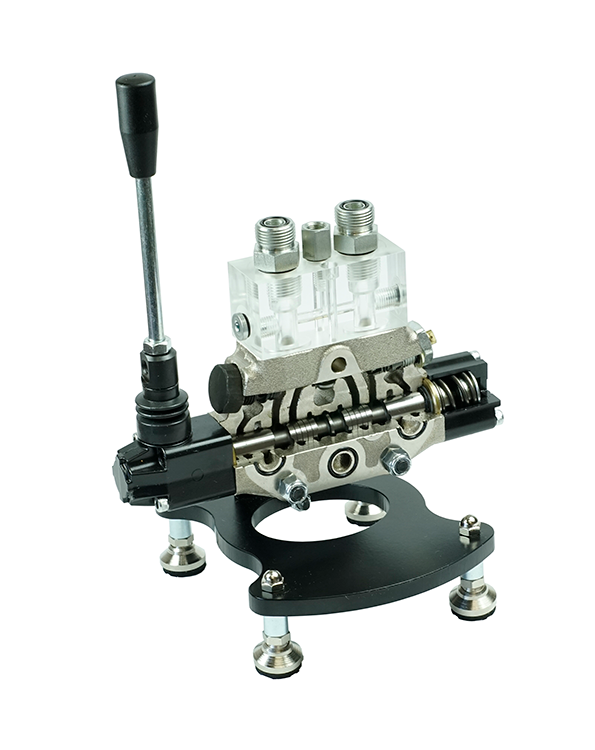
MDCV-LS-CM — Mobile Directional Control Valve w/ Load Sense Cutaway
Featuring the same internal valve cutaways as the standard MDCV model plus a transparent acrylic load-sense module, this version lets students visualize how load-sensing circuits communicate pressure requirements back to the pump. It’s ideal for teaching modern mobile hydraulic systems, energy efficiency, and flow-sharing concepts.
DAC-CM — Double-Acting Single-Rod Cylinder Cutaway
With a clear acrylic cylinder barrel, this model exposes the piston, rod, and sealed chamber areas so students can see how a cylinder creates force and motion. Breathers on the ports allow smooth manual movement, making it easy to demonstrate extension, retraction, and area-based force differences. A perfect introductory cylinder teaching tool.
PORV-CM — Pilot-Operated Pressure Relief Valve Cutaway
This cutaway reveals both stages of a pilot-operated relief valve, helping students understand the interaction between the pilot section and the main poppet. Because internal flow paths and components are fully exposed, instructors can clearly demonstrate concepts such as cracking pressure, pilot flow, and balanced operation. Essential for teaching advanced pressure control.
OSV-CM — Orbitrol Steering Valve Cutaway
This orbitrol cutaway exposes the metering section, spool-and-sleeve assembly, and centering springs, giving students a complete visualization of how hydraulic steering systems function. By examining internal metering elements, learners gain practical insight into steering flow, manual metering, and the mechanics of articulated vehicle steering systems.