- (801) 210-1303
- [email protected]
- Weekdays 9am - 5pm MST
The first step to securing funding is building a plan for your program. Let us help you get started.
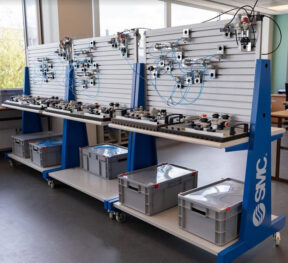
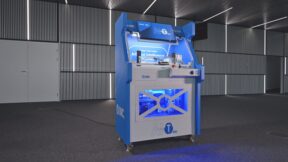
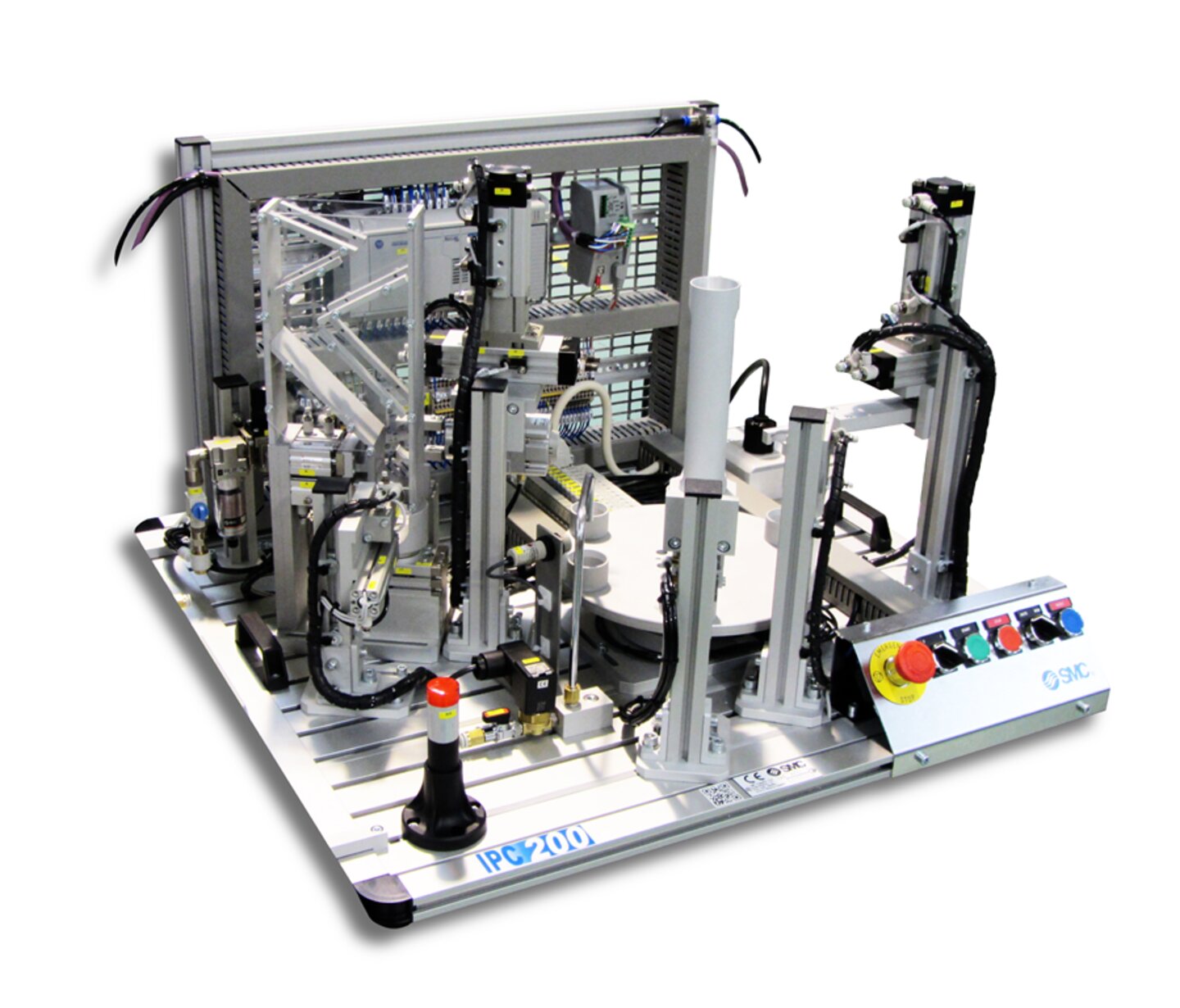
The IPC-200 is SMC’s unique training solution specific to automation and process control. Commonly used for training in the food & beverage production and processing industries as well as pharmaceutical industry, the IPC-200 brings real-world industrial skills and technologies to students’ fingertips with an exciting and project-based tabletop training system.
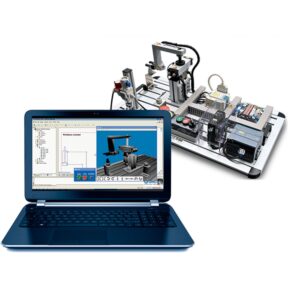
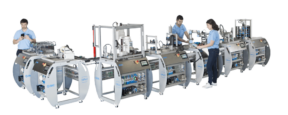
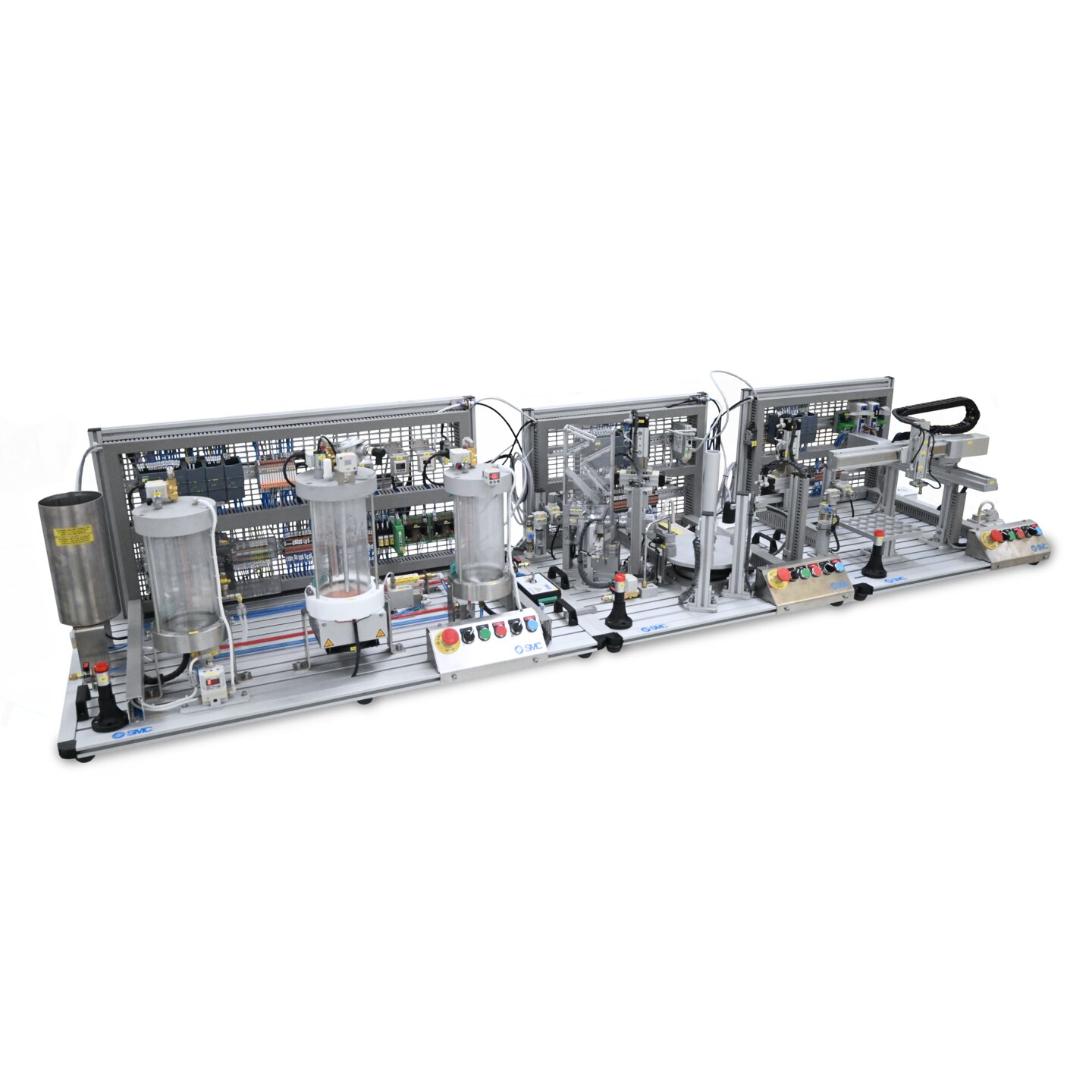
A fully modular and flexible automate process control system, the IPC-200 is comprised of three modules which can work individually or as a complete process line. Various configurations can be created to adapt the IPC-200 equipment to our users different requirements and budgets.
IPC-200 emulates a liquid production and bottling plant and includes the technologies used in a continuous process industry, such as pneumatics, electric motors, sensors, continuous processes, programmable controllers, industrial communications, etc.
It is built entirely from industrial materials so that student works with the same elements found in the working environment.

The system emulates an automated drink bottling and production plant. The system consists of three modules that share information through an industrial communications network and can be controlled through a SCADA application. The three modules are:
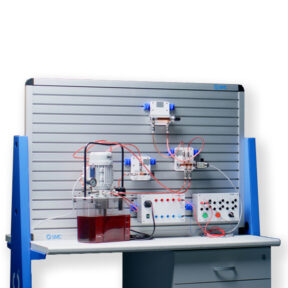
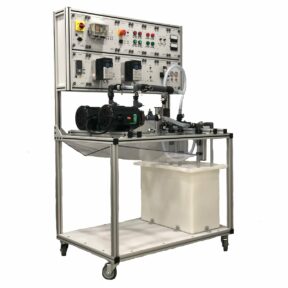
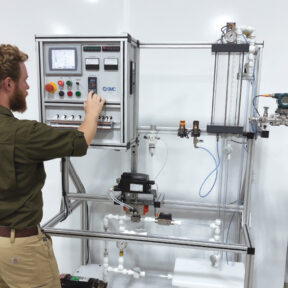
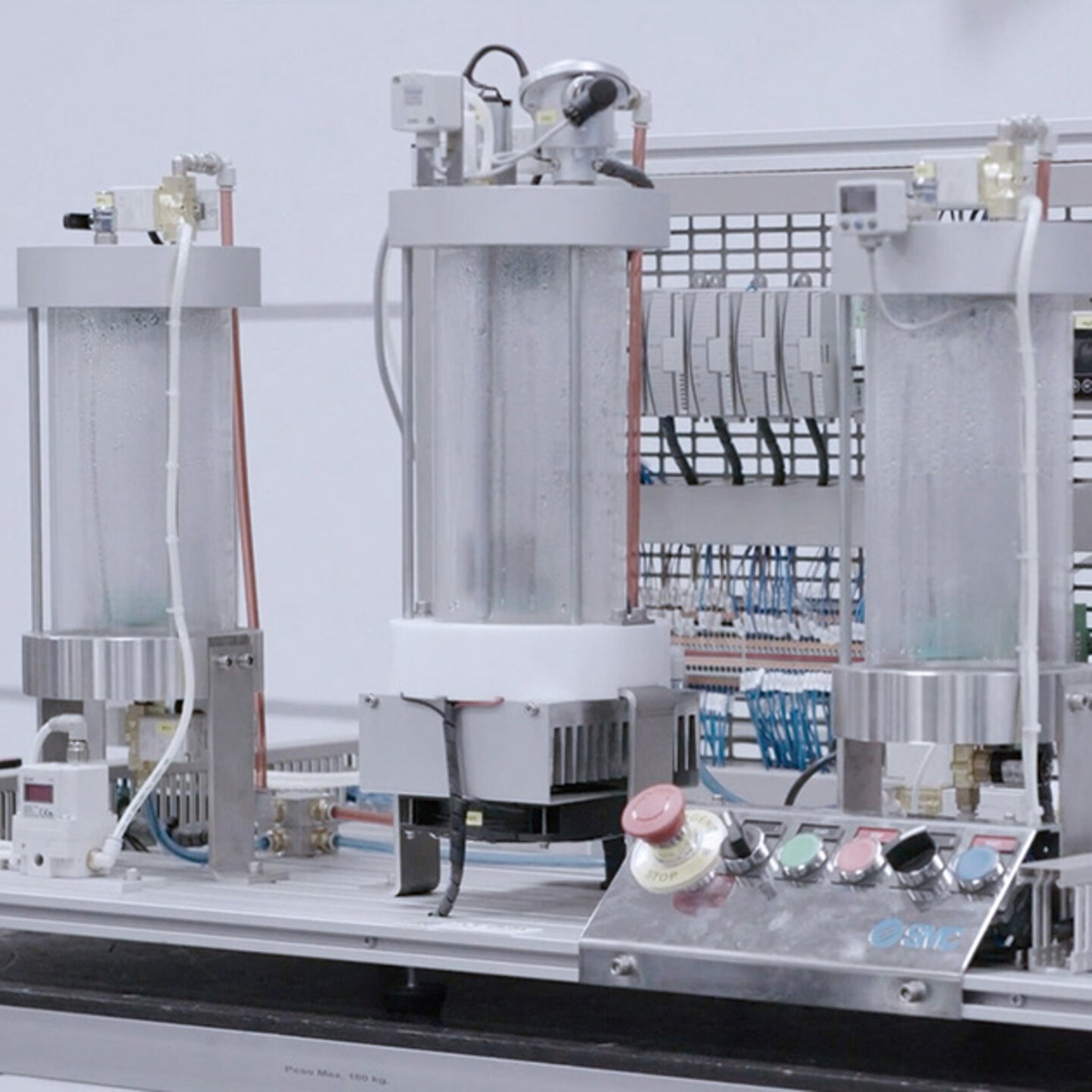
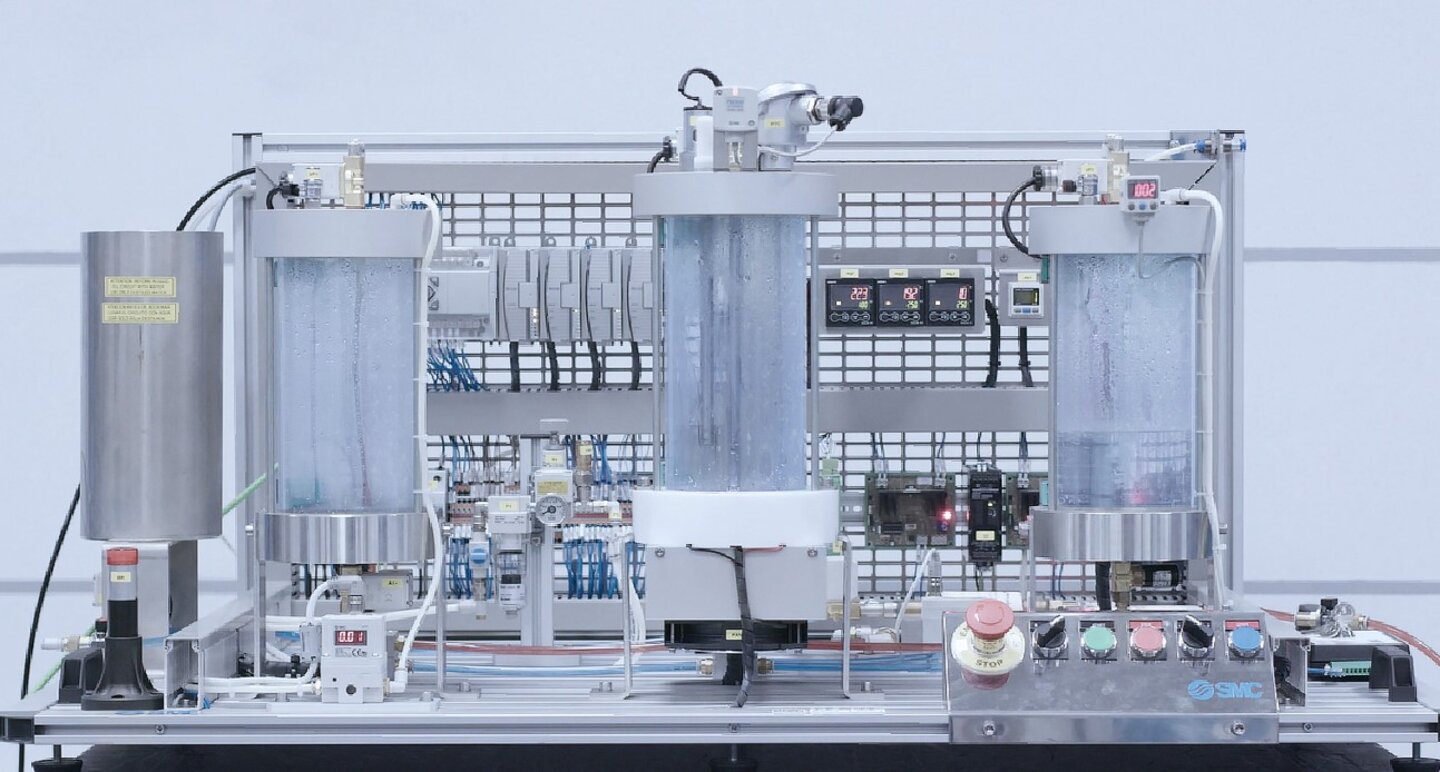
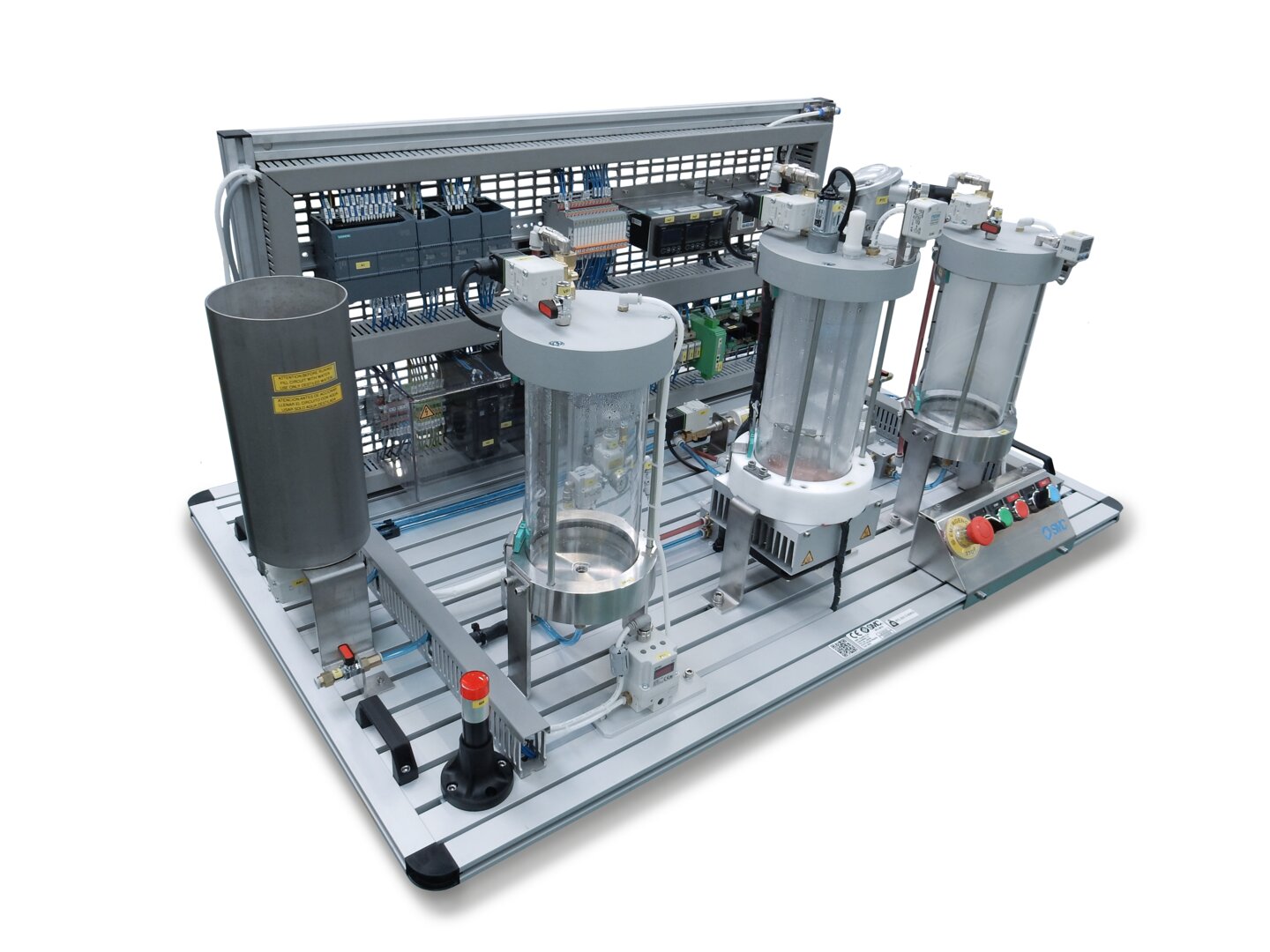
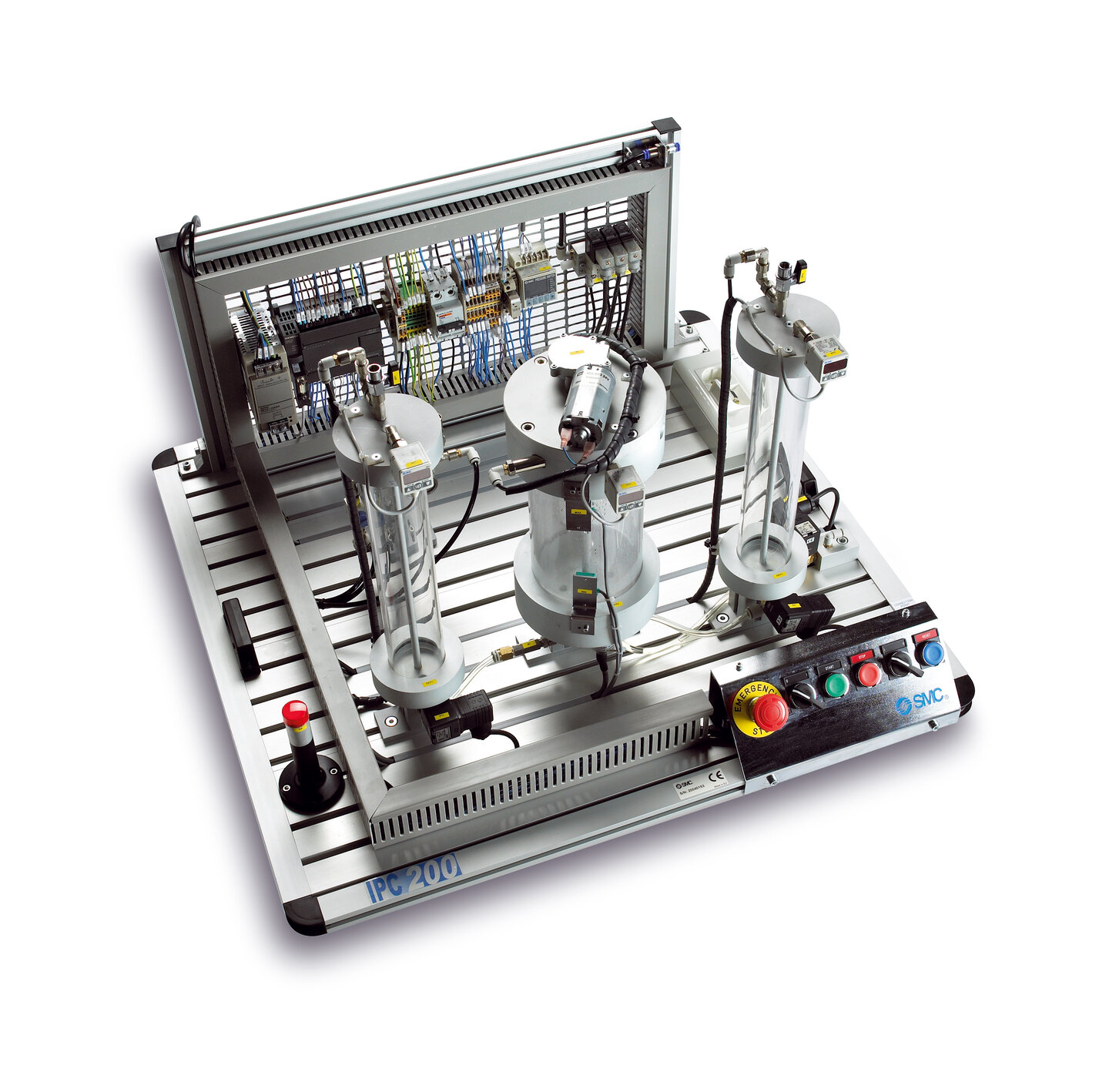
This first station represents the production and mixing of the liquid. It has three tanks: two at the side which store the raw material (liquid) and another in the middle where the mixing takes place.
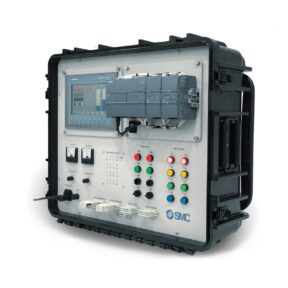
This version of the production station can control digital variables.
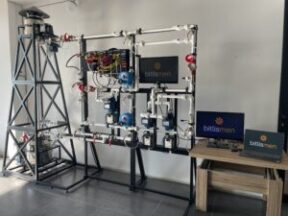
This version of the production station incorporates a series of elements regulate and control TEMPERATURE, LEVEL, PRESSURE and FLOW RATE.
This equipment is specially designed for the development of professional skills required in continuous process industry (in sectors such as food, pharmaceutical, chemical, petroleum, etc.).
The troubleshooting simulation system TROUB-200 is included, which generates up to 16 different breakdowns to be diagnosed by the user.
The second IPC-200 station fills the bottles and feeds and positions lids. The bottles then move on to a third station for storage. All the operations carried out are distributed around a 6 positions index plate.
There are two versions of this station, depending on the bottle feeding module selected: a version with a gravity bottle feeder and another with a more complex feeder with position detection and automatic correction.
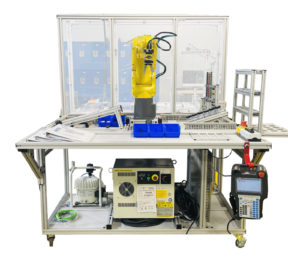
This station reproduces a 25 positions automatic warehouse by using a system based on three cartesian coordinate (two horizontal electric axes and one vertical pneumatic axis).
It allows the following processes in the first module:
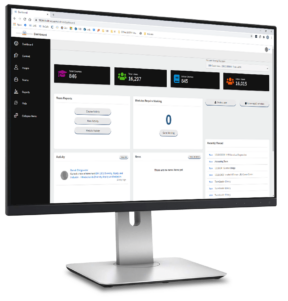
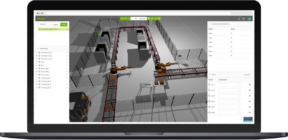
It also allows the three system modules to be controlled and monitored remotely through a graphic interface implemented in a software application.